
Have you seen the movie Dr. Dolittle? Funny guy? Communicates with animals? I saw the one with Eddie Murphy when I was much younger, and after over an hour of laughter, the movie left me with a question and a desire: Is this possible? I want to do that!
Today, I’m a veterinarian. After years of rigorous training, I can use complex medical examinations, observe an animal, listen to its different sounds, use several touch techniques, and even perceive smells to get a sense of the most likely conditions they’re in. But I can’t ask the animal how it feels, like our doctors do.
What if veterinarians could be Dr. Dolittle? How much better could interventions, and life itself, be for billions of animals? Maybe I could ask questions not only to clients anymore, but directly to the animals.
The thing is, it’s no longer the stuff of sci-fi. And I’m getting to the bottom of it with my research paper.
Over the past 3 months, I’ve been a part of Future Kind’s AI for Animals fellowship, where we explored interesting ways AI could dramatically improve or worsen animal lives. For my project, I decided to research how AI-based interpretation of animal signals could improve diagnosis, treatment, and welfare outcomes in veterinary practice.
This is what I know so far. Let me break it down into two layers: what’s available to the public, and what’s being developed for veterinary professionals.
As cool as it would be, we are not yet at the point of having full conversations with animals but that field is rapidly growing, with techniques like Natural Language Processing leading the way.
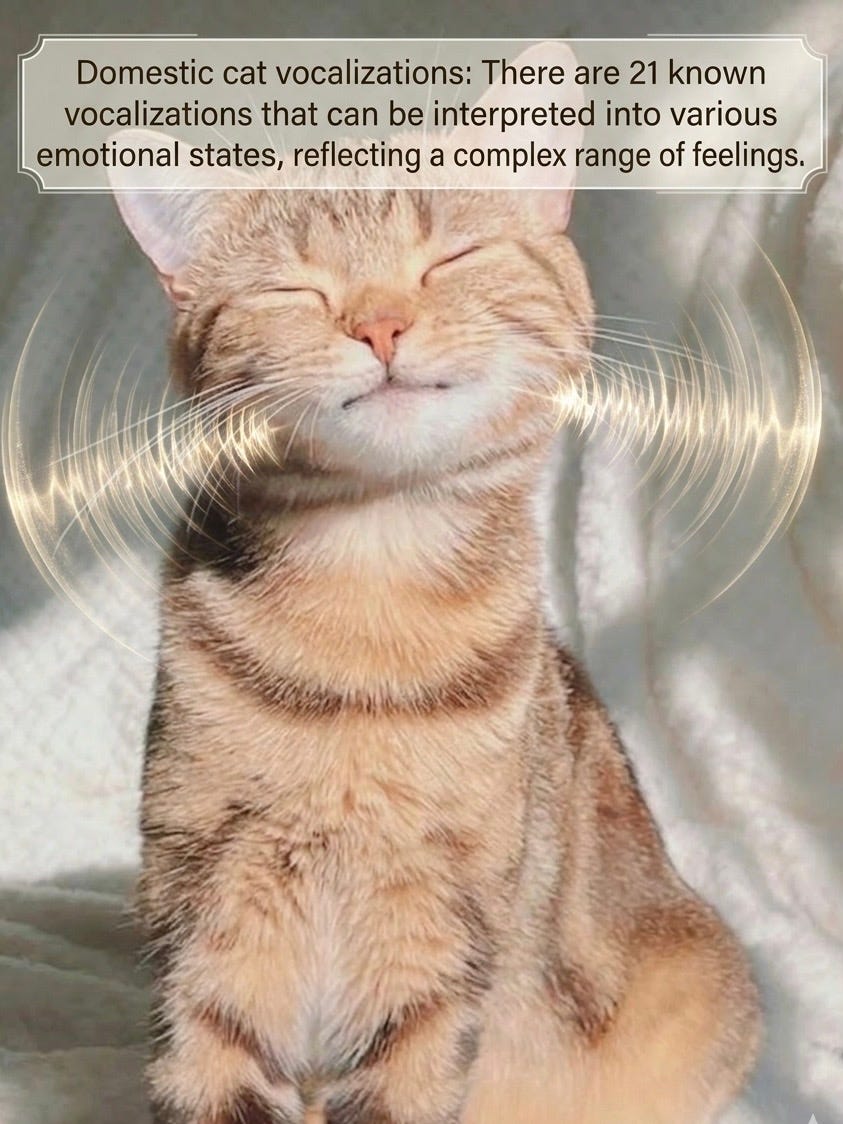
For the general public, current technology for animal communication centers on AI-driven decoding of vocalizations, behaviors, and signals, mainly for pets (dogs and cats) and some livestock. There are several apps available to everyday users that classify dog barks into categories like play, aggression, and loneliness, and even play back sounds so you can “respond” to your dog. Similar AI apps help translate cat meows.
In veterinary sciences, the tools go deeper. A lot of funding and research effort was put into developing Precision Livestock Farming (PLF) tools, that we can now adjust to other species and beyond industrial farms. Bioacoustic analysis, facial recognition, and emotional contagion models can help professionals interpret distress, pain, and emotional states in domestic animals. This supports early interventions like pain management, environmental enrichment, or social reunions that reduce suffering and promote positive physical and mental states under Five Domains welfare models. Instead of waiting for an animal to become visibly ill or distressed, these AI tools allow for preemptive action.
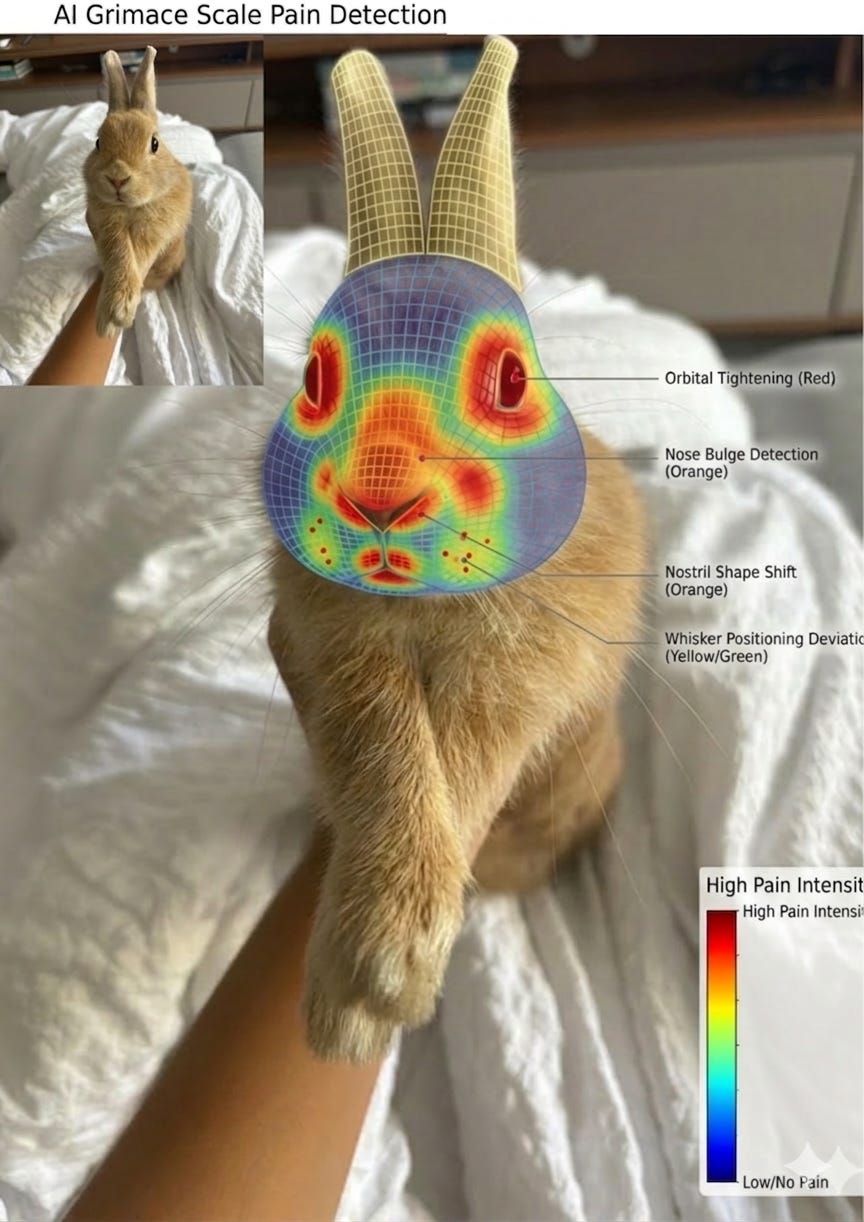
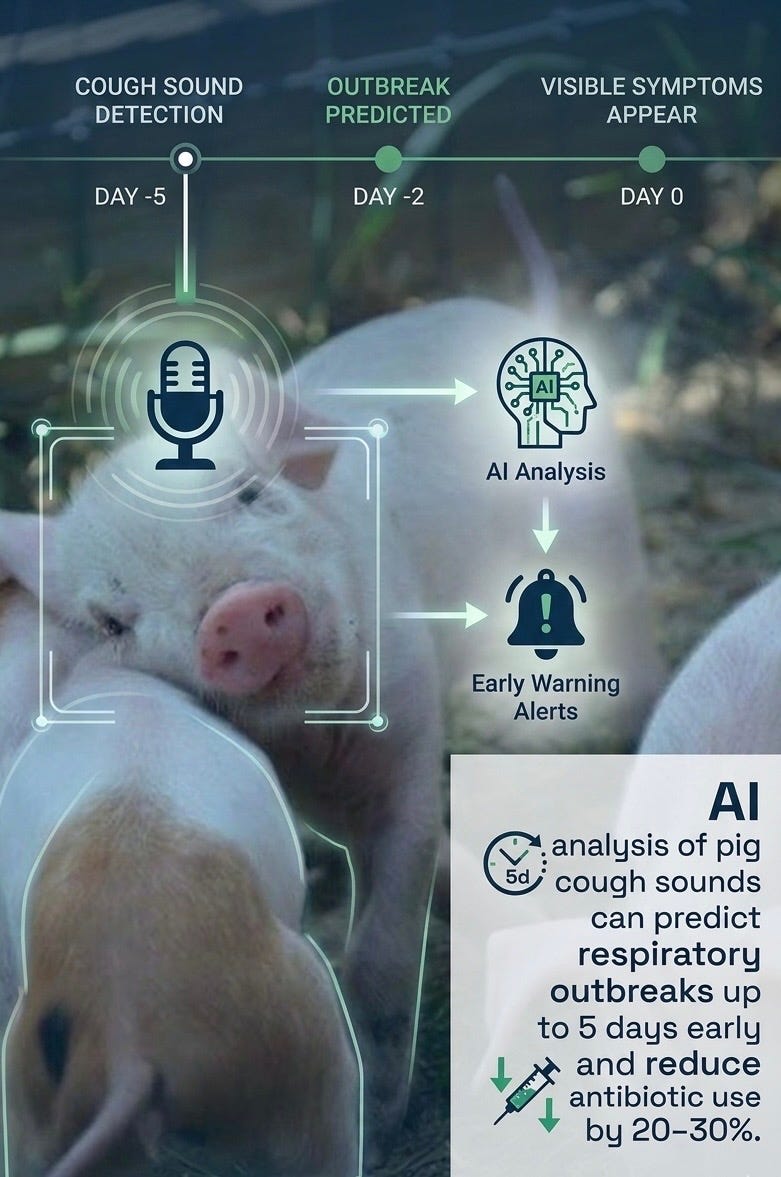
Neural networks can already identify distress calls in chickens with 95.6% accuracy, detect emotional states in pigs and goats, and even predict respiratory outbreaks in pigs five days before symptoms appear, all from sound alone. On the visual side, automated grimace scales using facial recognition detect pain in cats and dogs with up to 88% accuracy, which could be vital for stoic animals that hide their suffering.
The use of heatmaps and Explainable AI (XAI) is a game-changer for moving these tools out of the lab and into actual veterinary clinics. In traditional AI, the computer often acts as a black box giving you an answer (like “this cat is in pain”) but not telling why. Heatmaps act as a visual guide, showing exactly which parts of a signal, like the specific pitch or rhythm of a bleat the AI used to make its decision. By making the AI’s reasoning visible, these tools directly address the skepticism professionals often have toward opaque technology, which is one of the biggest barriers to real-world adoption.
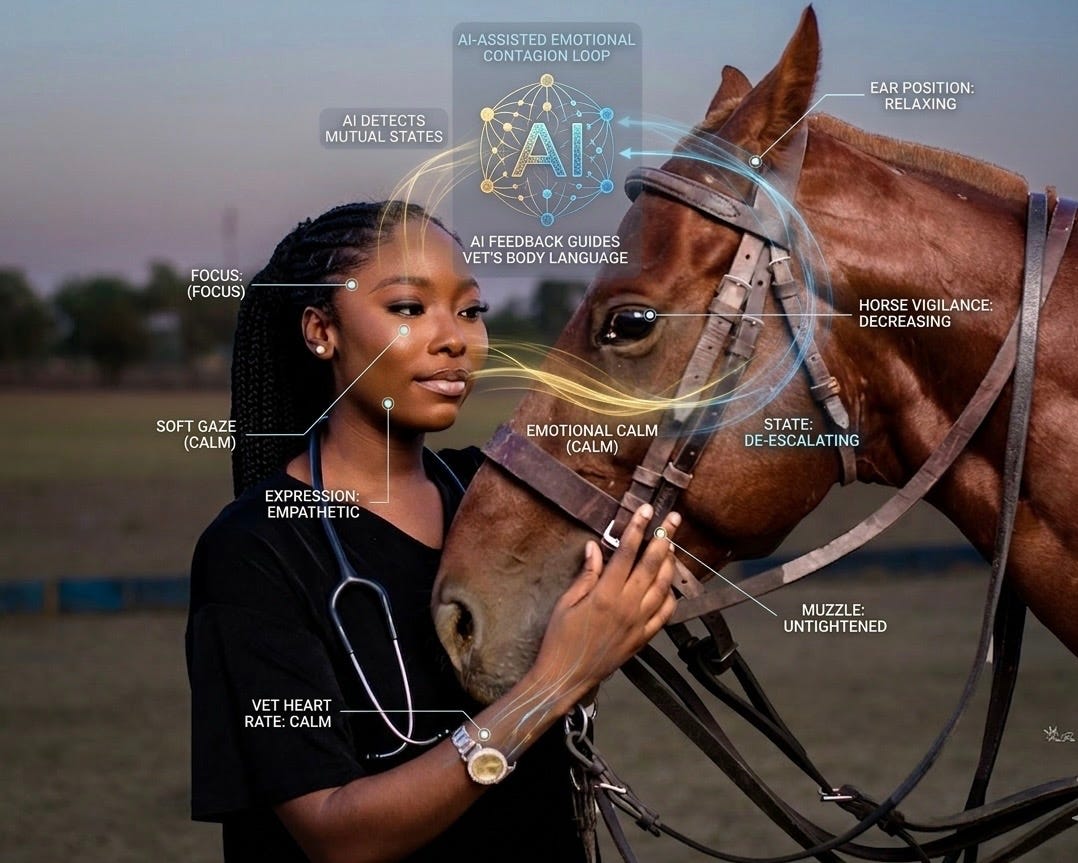
Interestingly, by understanding how animals mirror our emotions, a concept called emotional contagion, vets can use AI feedback to become more aware of, and modulate, their own body language, helping keep the animal calm during consultations.
One more encouraging finding: vocal expression patterns show strong similarities across species, meaning some existing models can be adapted to work beyond the species they were trained on. However, for often-neglected species like rabbits, prey animals that instinctively hide pain and illness, species-specific models would be especially valuable.
AI wouldn’t replace all the skills vets are equipped with, but it can act as an extra pair of eyes and ears. Maybe we won’t truly be Dolittle, but maybe we don’t need to be.
For true interspecies communication, serious research initiatives, like Project CETI and the Earth Species Project, are using large datasets and deep learning to pursue something far more ambitious. It might begin with highly social and intelligent animals, like dolphins, whales, and great apes, whose complex communication systems give AI the most to work with. I imagine it being simple rather than sophisticated— closer to talking with Groot than with Rocket. (Guardians of the Galaxy, anyone?)
I’m still going deeper into research mode with my mentor, whose invaluable insights have been my North Star. We’re uncovering more available techniques, identifying weak spots, and understanding the ethical concerns involved: premature commercialization, misinterpretations, dual use and misuse, and more.
Stay tuned?
This is such a fascinating deep dive Peace! It amazing seeing how AI is advancing veterinary science. Looking forward to your next piece!
great findings,there is more you are about to help Us uncover ✨✨✨✨✨✨✨✨✨✨✨